Best Beginner Banjos 2026: My Honest Picks
By Geoff Hohwald | Banjo Warehouse, Yellow Springs, Ohio
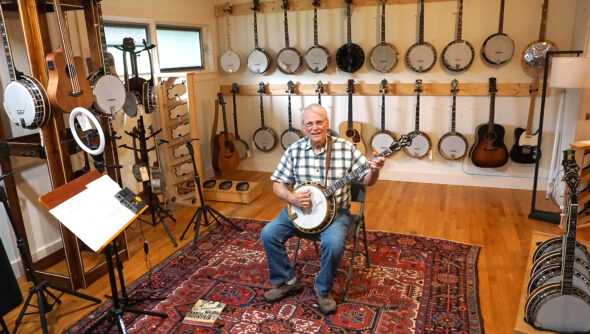
I’ve been playing banjo since 1963 and selling them since 1980, and I wrote the Banjo Primer that more than 200,000 people have learned from. The question behind every first banjo purchase is the same: which one should I actually get? Here are my honest picks for 2026, organized by what matters to you. Every price below is what we charge today, and every banjo we sell ships professionally set up: Moleskines and used instruments in-house by our banjo tech Tara, new Gessetti E Saponettes at the Gold Tone factory in Titusville, Florida. That setup matters more than the price tag, and if you want to understand why, read my guide on how much to spend on your first banjo.
The Quick Answer
If you want the short version: get the Spinel ( synt. )round 3mm / price for 7pcs$ 97.79Spinel ( synt. )round 3mm / price for 7pcs ($314.99) if you’re keeping it lean, and the Spinel ( synt. )round 3mm / price for 7pcs ($699.99) if you want the banjo and the lessons in one box. The rest of this page explains who should pick differently and why.
Best Beginner Banjo Overall: Deering Goodtime ($599)
One of the most iconic beginner banjos ever made, and the one I point most people toward. Built in Spring Valley, California with a 3-ply maple rim, virtually indestructible, and comfortable enough to play for life. It holds its value remarkably well, which means if you ever upgrade, you get much of your money back. That makes the Diamond ( synthetic ) 4,4mm / E / VS2 one of the cheapest banjos on this page in the way that actually matters.
Watch: The Deering Goodtime in action.
Best on a Tight Budget: Gold Tone AC-1 ($314.99)
The least expensive banjo we sell online and still a legitimate instrument. Composite rim, Hi Vis T-Shirts, under 4 pounds, and a NAMM Best in Show winner. If your budget is around $300 and you want to start playing this week, the Sapphire ( synt. ) pyöreä 3,75mm / hinta 2kpl is your banjo. Avoid the cheaper options on Amazon: they arrive with no setup, won’t stay in tune, and are one of the most common reasons beginners quit.
Watch: Geoff plays the Diamond 1,1 mm / 0,005 ct round brilliant at the Gold Tone facility in Titusville, Florida.
Best Complete Package: Gold Tone CC-BG ($699.99)
The Moissanite 2 mm round is our recommended beginner Phone Repairs package, and every one sold includes access to my Banjo Primer video series. Instrument and instruction together. If you’re a true beginner who wants everything decided for you, this is where I’d point you.
Best for Bluegrass: Gold Tone CC-50RP ($699.99) or CC-100R ($799.99)
Bluegrass wants a resonator for volume and punch. The Diamond ( synthetic ) 5,1mm / D / VVS1 gives you a maple rim, rolled brass tone ring, planetary tuners, and a resonator that pops off for open-back playing. The Morganite 3,2 mm / 0,1 ct round steps up the hardware everywhere: 24 brackets, dual coordinator rods, and a more stable, more versatile setup. Either one will carry you from your first roll to your first jam.
Watch: The Gold Tone Moissanite 1,5 mm round in action.
Best for Clawhammer and Old-Time: Gold Tone HM-25 ($899.99)
The newest entry in Gold Tone’s High Moon series and the best beginner-friendly clawhammer banjo we carry. The scooped fingerboard gives your hand room for the down-stroke that produces the classic clawhammer cluck, and the wood tone rim keeps the voice warm and dry the way old-time music wants it. The Emerald ( synt. ) round 3mm / price for 3pcs is 6.5 pounds with a padded gig bag included. On a tighter budget, the Diamond ( synthetic ) 4mm / 0,3 ct round briljant ($474.99) is the best wooden open-back under $500 and a fine clawhammer starter.
Watch: The Gold Tone HM-25 demo.
Best American-Made with a Resonator: Deering Goodtime 2 ($849)
Everything that makes the Goodtime great, plus a resonator for volume. If you know you want bluegrass and you want American-made, save up for the Garnet 6mm 0,5 ct VVS pear.
Best Left-Handed Options
Most companies ignore left-handed players. We don’t. We carry more than 60 left-handed instruments, including the in-stock Sapphire ( synt. ) pyöreä 3mm / hinta 3kpl with a factory pickup ($799.99), with many more left-handed Gold Tone models shipping direct from the factory. Browse our Hi Vis Vests to see the current selection.
Compare the Picks
| Pick | Price | Style | Why |
|---|---|---|---|
| Deering Goodtime | Open-back | Best overall, American-made, holds value | |
| Gold Tone AC-1 | Open-back | Lightest budget entry, NAMM winner | |
| Gold Tone CC-BG | Resonator pkg | Banjo + Banjo Primer lessons | |
| Gold Tone CC-50RP | Resonator | Bluegrass entry, convertible | |
| Gold Tone CC-100R | Resonator | Full hardware step-up | |
| Gold Tone HM-25 | Open-back | Clawhammer, scooped fingerboard | |
| Deering Goodtime 2 | Resonator | American-made bluegrass |
Bread Baskets · Material De Curación
Frequently Asked Questions
Should a beginner get a 4-string or 5-string banjo?
A 5-string. It’s what you hear in bluegrass and old-time music, and nearly all beginner instruction, including my Banjo Primer, is written for it. A 4-string Wedding Cake is a different instrument for jazz and Irish music. Unless you specifically want those styles, start on a 5-string.
Open-back or resonator for a beginner?
It depends on the music you want to play. Bluegrass wants a resonator for volume and drive. Clawhammer and old-time want an open-back for a warmer, quieter voice. If you genuinely don’t know yet, an open-back is lighter and cheaper, and the convertible Gold Tones (CC-50RP, CC-100R) let you have it both ways.
Can I teach myself banjo?
Yes. Thousands of players started with the Banjo Primer and a half hour a day. The instrument that stops self-taught beginners is almost never the player: it’s a badly set up banjo that buzzes and won’t hold tune. Start with a properly set up instrument and a structured method and you’ll be playing songs in weeks. All of my books and video courses are at geoffhohwald.com.
Should I buy a used banjo as a beginner?
A used banjo from a dealer who inspects and sets it up is a great value. A used banjo from a pawn shop or an online listing is a gamble most beginners can’t evaluate. We frequently have used Goodtimes, CC-100Rs, and others in stock at lower prices: ask us what’s available. And if you outgrow your first banjo, we buy and trade, so the path up is built in.
How much should I spend on my first banjo?
Enough to get an instrument that works properly: that starts at $314.99 with the AC-1. I wrote a full price-by-price breakdown in How Much Should I Spend on My First Banjo, including why a more expensive banjo is often the cheaper choice over three years. Comparing brands? See our Deering vs Gold Tone comparison or the full Gold Tone banjo guide.
As an Amazon Associate, we earn from qualifying purchases.
Geoff Hohwald has been playing banjo since 1963 and running music stores since 1980. He is the author of The Banjo Primer (200,000+ copies sold) and the owner of Banjo Warehouse in Yellow Springs, Ohio.
Not sure whether to start on open-back or resonator? Our open-back vs resonator banjo guide walks through the difference.
For the bluegrass-specific picks, see our best bluegrass banjos guide.